
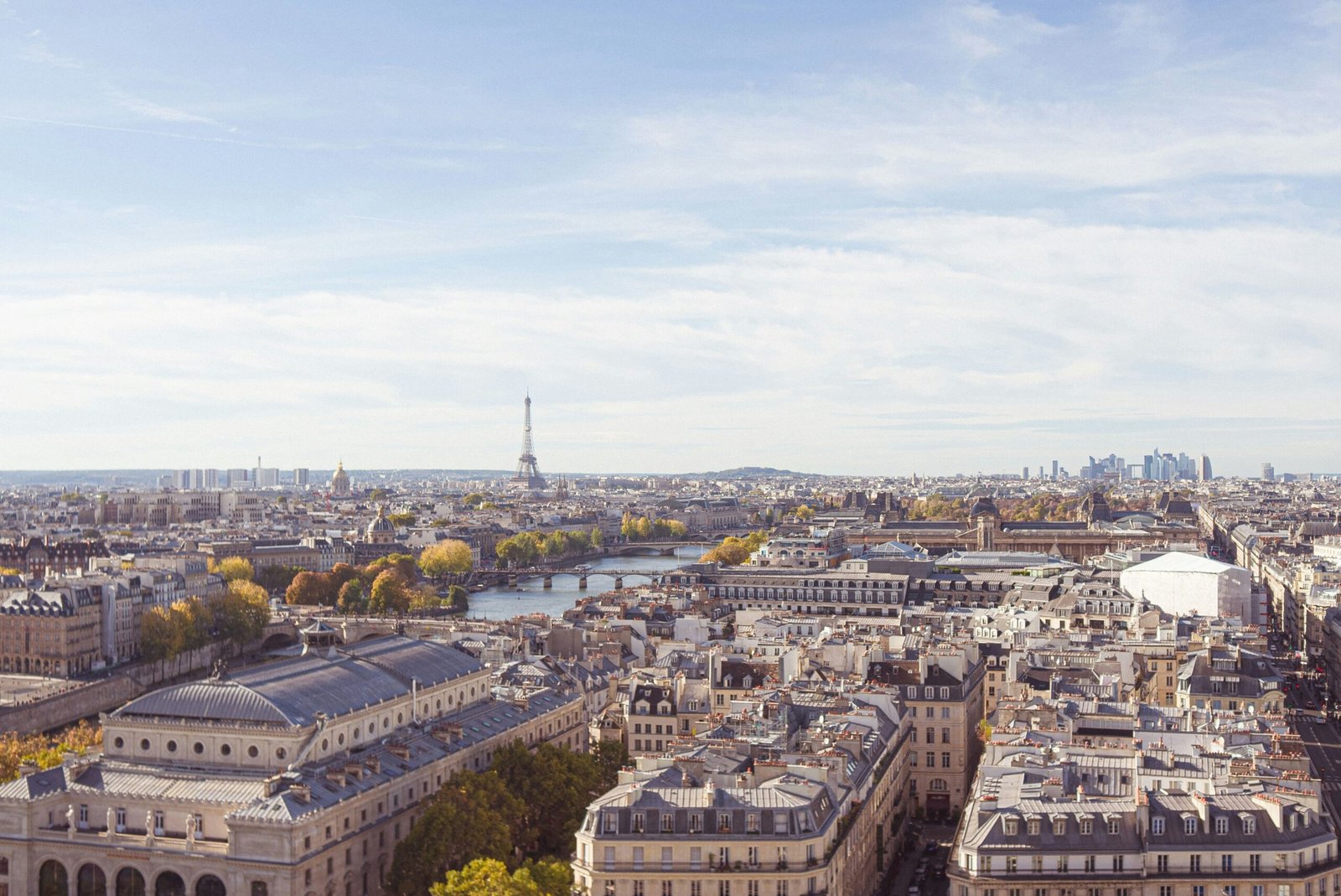
Planning Our Parisian Adventure: The Lure of Proximity
Paris, the City of Lights, holds an undeniable charm for us. The romantic boulevards, the iconic landmarks, the world-class museums – it’s a destination that calls to our collective wanderlust. When we envision our perfect Parisian getaway, one crucial element consistently rises to the top of our priorities: staying near the heart of the action. We’ve learned from past travels that proximity to major tourist attractions isn’t just about convenience; it’s about maximizing our precious time, immersing ourselves fully in the city’s ambiance, and minimizing the logistical headaches that can sometimes accompany exploring a sprawling metropolis. Imagine waking up and having the Eiffel Tower’s shimmering silhouette just a short stroll away, or being able to pop back to our hotel for a quick refresh before embarking on another adventure. This isn’t just a fantasy; it’s a strategic choice we make to enhance our entire travel experience.
Our reasoning is simple: time is our most valuable currency when traveling. Every minute spent commuting on crowded public transport or navigating unfamiliar streets away from our desired destinations is a minute we could be spending marveling at a masterpiece in the Louvre, sipping coffee at a charming café in Saint-Germain-des-Prés, or simply soaking in the vibrant atmosphere. Staying near the attractions allows us to be spontaneous, to linger longer at a spot that captures our imagination, or to easily return to our comfortable base for an afternoon siesta before resuming our explorations. It also often means we’re in neighborhoods with a higher concentration of quality restaurants, bakeries, and shops, further enriching our local experience. The energy of these central areas is infectious, pulling us into the Parisian rhythm from the moment we step out of our hotel. While we understand that staying further out can sometimes offer more budget-friendly options, we’ve found that the trade-off in convenience and experience often isn’t worth the savings, especially when we consider the cumulative cost and time associated with transportation. For us, the investment in a centrally located hotel is an investment in a richer, more fulfilling Parisian adventure.
When planning a trip to Paris, finding the perfect hotel near popular tourist attractions can enhance your experience significantly. For those interested in luxurious accommodations, you might also want to explore options in other romantic cities. A related article that highlights some exquisite hotels is available at 15 Romantic Luxury Hotels Near Thames River, which showcases stunning places to stay while enjoying the beautiful views of the Thames.
Understanding Paris’s Layout and Key Neighborhoods

Before we even begin browsing hotel websites, our first crucial step is to gain a solid understanding of Paris’s geography and the distribution of its major tourist attractions. The city is divided into 20 arrondissements, or districts, spiraling outwards from the city center like a snail shell. Each arrondissement possesses its own unique character, and importantly for us, a distinct cluster of attractions. Knowing which arrondissements house our “must-see” sights allows us to narrow down our hotel search significantly and make informed decisions about where we want to base ourselves. We don’t want to accidentally book a hotel on the outskirts of the city and then realize we’re spending hours each day commuting.
The Iconic Heart: Louvre, Notre Dame, and the Islands
The 1st, 4th, and parts of the 6th arrondissements form the historical and cultural heart of Paris. The 1st arrondissement is home to the magnificent Louvre Museum, the Tuileries Garden, and the Palais Royal. Staying here puts us within walking distance of artistic masterpieces and beautiful green spaces. The 4th arrondissement encompasses the charming Île de la Cité, home to the revered Notre Dame Cathedral (currently undergoing restoration, but still a powerful presence), and the equally picturesque Île Saint-Louis. The Marais district, a vibrant area known for its historic architecture, trendy boutiques, and lively atmosphere, also falls largely within the 4th. If we’re looking for an immersive experience with easy access to ancient history and iconic religious sites, this area is a strong contender. The eastern part of the 6th arrondissement, particularly near Saint-Germain-des-Prés, offers a quintessential Left Bank experience with its intellectual history, charming cafes, and high-end boutiques. Hotels here often come with a higher price tag, but the ambiance and proximity to significant landmarks like the Luxembourg Gardens are often worth the splurge for us.
Eiffel Tower and Champs-Élysées Grandeur
For many, the Eiffel Tower is the quintessential symbol of Paris. If having the Iron Lady within easy reach is a top priority, we focus our search on the 7th arrondissement. This elegant district also hosts the Musée d’Orsay, the Rodin Museum, and Les Invalides, making it a cultural hub. The 8th arrondissement, meanwhile, is synonymous with the grandeur of the Champs-Élysées, the Arc de Triomphe, and luxurious shopping. Staying in these areas offers a more opulent experience and convenient access to some of Paris’s most famous landmarks, though prices tend to reflect this prestige. We often find that hotels slightly outside the immediate tourist hotspots within these arrondissements can offer a better balance of location and value.
Artistic and Bohemian Quarters: Montmartre and Latin Quarter
If our travel style leans towards the bohemian and artistic, we might consider the 18th arrondissement, home to the enchanting Montmartre hill. While Montmartre itself is a significant attraction with the Sacré-Cœur Basilica and Place du Tertre, it’s slightly further north than some of the central attractions. However, we’ve found that its unique village-like atmosphere, stunning views, and artistic heritage make it a compelling choice for those seeking a different side of Paris. Good public transport connections are essential if we choose this area. Alternatively, the 5th arrondissement, known as the Latin Quarter, is perfect for those who appreciate intellectual history, charming narrow streets, and a lively student atmosphere. It’s home to the Sorbonne University, the Panthéon, and the Jardin des Plantes, offering a mix of historical sites and vibrant street life. It’s also relatively close to Notre Dame and the Île de la Cité, making it a good compromise for accessibility to various attractions.
Beyond the Main Tourist Hubs: Strategic Outliers
While our primary goal is proximity to major attractions, we also acknowledge that some important sites are a bit more spread out. For example, the Palace of Versailles, while a must-see, is located outside the city center. We wouldn’t expect to find a hotel within walking distance of Versailles if we also want to be near the Louvre. In such cases, we prioritize our in-city attractions and plan a dedicated day trip to Versailles, utilizing Paris’s excellent RER train system. Similarly, attractions like Parc de la Villette or the Cité des Sciences et de l’Industrie are located in the 19th arrondissement, which is further out. For these, we rely on the efficient Metro system to connect us. Our strategy is always to prioritize a central location for the majority of our planned activities and then factor in public transportation for the outliers.
Effective Hotel Search Strategies

Once we’ve identified our preferred arrondissements based on our desired attractions, we dive into the actual hotel search. This phase requires a methodical approach, utilizing various online tools and keeping a keen eye on specific details that can make or break our stay. We don’t just pick the first appealing option; we meticulously compare, contrast, and verify.
Leveraging Online Travel Agencies (OTAs) and Meta-Search Engines
Our first port of call is typically a combination of major Online Travel Agencies (OTAs) like Booking.com, Expedia, and Hotels.com, along with meta-search engines such as Kayak or Google Hotels. These platforms offer a vast inventory of hotels, allowing us to filter by location, price, star rating, and amenities. Crucially, they all provide map views, which are indispensable for us. We zoom in on our target neighborhoods and visually assess the proximity of hotels to our chosen landmarks. We pay close attention to the distance indicated (e.g., “0.5 km from the Louvre Museum”), but we also cross-reference this with the actual street layout. A hotel might be “close” as the crow flies but separated by a busy boulevard or a winding street, making the actual walk longer.
Utilizing Map Filters and “Points of Interest”
Most OTAs and meta-search engines have excellent map functionalities. We always start by inputting “Paris” as our destination and then immediately switch to the map view. From there, we can often type in specific landmarks like “Eiffel Tower” or “Louvre Museum” and see hotels marked relative to these points of interest. Some platforms even allow us to draw a custom radius around a landmark, helping us filter hotels within a desired walking distance. This visual approach is far more effective for us than simply browsing a list of hotels, as it directly addresses our primary concern of proximity. We also make sure to check the nearest Metro stations, even if we plan on walking a lot. Having a Metro station close by provides a convenient backup for longer distances or inclement weather.
Cross-Referencing Google Maps and Street View
Never underestimate the power of Google Maps. Once we’ve shortlisted a few promising hotels on an OTA, we immediately switch to Google Maps. We type in the hotel’s address and then add our target attractions. This allows us to see the exact walking route, estimated time, and even public transportation options. More importantly, Google Street View is an absolute game-changer. We “walk” virtually from the hotel’s entrance to the nearest attraction, allowing us to assess the surroundings. Is the street well-lit? Are there cafes and shops nearby, or does it feel isolated? Are there any noisy construction sites we should be aware of? This virtual reconnaissance helps us get a real feel for the neighborhood and can often reveal details that aren’t apparent from hotel photos or descriptions. We also check the location of nearby grocery stores or pharmacies, as these practical amenities can significantly enhance our stay.
Considering Transportation Networks
While walking is our preferred method of exploring Paris, we are always mindful of the city’s excellent public transportation system. Even if a hotel isn’t directly next door to an attraction, its proximity to a Metro station can make it just as convenient. We look for hotels that are within a 5-minute walk of a Metro stop, ideally on a line that connects directly or with minimal transfers to our main destinations. The RER lines are also important for reaching destinations further afield, like Versailles or Charles de Gaulle Airport, so proximity to an RER station can be a significant bonus. We consult the RATP (Paris public transport) map early in our planning to understand the main lines and their connections. A hotel that offers easy access to multiple Metro lines gives us greater flexibility in our daily explorations.
Budgeting and Value Considerations
While our priority is always proximity, we are also pragmatic travelers who understand the importance of budgeting. Staying in the heart of Paris, especially near major attractions, invariably comes with a higher price tag. Our approach is to find the sweet spot between an ideal location and a price point that aligns with our overall travel budget. It’s about finding value, not just the cheapest option.
Understanding Price Fluctuations by Season and Day of the Week
Paris experiences significant seasonal variations in hotel prices. We’ve learned that peak season (summer months, major holidays like Easter and Christmas, and fashion weeks) sees a surge in demand and corresponding price increases. Shoulder seasons (spring and autumn) often offer a better balance of pleasant weather and more reasonable rates. We try to be flexible with our travel dates if possible to take advantage of off-peak pricing. Even within a week, prices can fluctuate, with weekends typically being more expensive than weekdays, particularly for business-oriented hotels. We always check prices across a range of dates around our intended travel period to identify the best value.
The Trade-off Between Proximity and Price
This is the eternal dilemma for us: how much are we willing to pay for convenience? While we prioritize being close to attractions, we also recognize that a hotel directly across from the Louvre will likely be significantly more expensive than one a 10-15 minute walk away. Our strategy is to define an acceptable walking radius (e.g., within 20 minutes of our primary attraction) and then search for hotels within that zone. Often, moving just a few blocks away from the absolute epicenter can yield substantial savings without significantly impacting our convenience. We assess the cost-per-night against the estimated time and cost of public transport from a slightly less central location. Sometimes, the savings on accommodation can offset the cost of a Metro pass, but we have to weigh that against the lost time and added hassle of commuting.
Looking for Deals and Special Offers
We are always on the lookout for deals. Subscribing to email newsletters from OTAs and specific hotel chains can provide early access to promotions. Sometimes, booking a non-refundable rate can offer a discount, but we only consider this if our travel plans are absolutely firm. Package deals (flight + hotel) can also sometimes present savings, though we always compare them against booking components separately. We also consider booking directly with the hotel’s website after finding a suitable option on an OTA, as sometimes they offer loyalty program benefits or slightly better rates to encourage direct bookings. Loyalty programs, if we belong to any, can also offer benefits like room upgrades or complimentary breakfast, further enhancing the value of our stay.
Hidden Costs: Tourist Tax, Breakfast, and WiFi
When comparing hotel prices, we are meticulous about identifying any hidden costs. Paris, like many European cities, levies a tourist tax (taxe de séjour) per person per night, which is often not included in the initial quoted price on OTAs and is collected at the hotel. We always factor this into our budget. Breakfast is another significant consideration. While a charming Parisian breakfast at a local bakery is a delightful experience, sometimes having breakfast included at the hotel, especially for families or those with early starts, can be a valuable perk, even if it adds a bit to the room rate. We weigh the convenience against the cost of eating out each morning. Similarly, while WiFi is almost universally free now, we still confirm its availability and reliability, as staying connected is important for us for navigation and planning. Some hotels might also charge for amenities like gym access or extra towels, so we scrutinize the fine print.
Room Size and Amenities vs. Location
Parisian hotel rooms, particularly in older, central buildings, are notoriously compact. We manage our expectations regarding space. While we appreciate a comfortable bed and a clean bathroom, we’re often willing to compromise on room size if it means a prime location. We consider which amenities are absolute necessities for us (e.g., air conditioning in summer, a kettle for tea/coffee) versus those that are nice-to-haves but not deal-breakers. A hotel with a small but functional room in a fantastic location often trumps a larger, more luxurious room in an inconvenient spot. We read recent reviews to gauge the actual size and condition of rooms, as photos can sometimes be misleading. Ultimately, for us, the experience outside the hotel room in Paris is what truly matters, and a good location facilitates that experience.
When planning your trip to Paris, finding the perfect hotel near popular tourist attractions can greatly enhance your experience. To help you navigate your options, consider checking out a related article that highlights some of the world’s best hotels, which can provide inspiration for your stay. For more insights, you can read about these exceptional accommodations in this article that showcases various options tailored to different preferences and budgets. By choosing the right hotel, you’ll be able to immerse yourself in the beauty of the City of Light while enjoying convenient access to its iconic sights.
Essential Booking and Pre-Trip Checks
Once we’ve identified our ideal hotel and are ready to book, our work isn’t quite done. A few essential checks and preparations before and after booking ensure a smooth and stress-free arrival, allowing us to focus solely on enjoying Paris. These steps are crucial for us to avoid any last-minute surprises or disappointments.
Reading Recent Reviews Critically
Reviews are our goldmine of information, but we read them with a critical eye. We filter reviews by “most recent” to get the most up-to-date picture of the hotel’s condition and service. We pay particular attention to comments about location, noise levels, cleanliness, staff helpfulness, and the accuracy of online descriptions. We also look for patterns: if multiple reviews mention a specific issue (e.g., slow WiFi, noisy street, tiny bathroom), it’s likely a legitimate concern. However, we also discount overly negative or positive reviews that seem exaggerated. We particularly value reviews that include photos, as these often give us a more realistic sense of the room and amenities than the professional hotel shots. Reviews that mention the hotel’s proximity to specific attractions or Metro stations are also incredibly useful for validating our location choices.
Confirming Cancellation Policies
Life happens, and plans can change. Before clicking “book,” we meticulously review the cancellation policy. We understand that non-refundable rates often offer savings, but we only opt for them if our travel dates are absolutely set in stone and we have travel insurance in place. For more flexibility, we prioritize bookings with free cancellation up to a certain date, even if it means a slightly higher upfront cost. This gives us peace of mind in case an unforeseen event necessitates a change in our itinerary. We mark the cancellation deadline in our calendar to ensure we don’t miss it if we need to adjust our plans.
Understanding Payment Procedures
Different hotels and OTAs have varying payment procedures. Some require full payment upfront, others take a deposit, and many only charge upon arrival. We confirm this detail to ensure we are prepared. We also check what currencies are accepted and if there are any foreign transaction fees associated with our credit cards. If paying in local currency, we ensure our bank offers competitive exchange rates. We also make a note of whether a credit card is required for incidentals upon check-in, even if the room has been pre-paid. Having these details clear upfront prevents any awkward situations or delays upon arrival.
Communicating Special Requests
If we have any special requests – a preference for a high floor, a quiet room away from street noise, a non-smoking room, or specific bedding configurations – we communicate these clearly during the booking process or directly with the hotel via email shortly after booking. While hotels can’t always guarantee every request, providing them in advance increases the likelihood of them being accommodated. We follow up with a polite email closer to our arrival date to reconfirm our requests and our booking, especially for crucial preferences like a quiet room. We also inform the hotel if we will be arriving late or require an early check-in, as this helps them manage their reception staff and room assignments.
Keeping Digital and Physical Copies of Confirmations
Finally, once our booking is confirmed, we keep both digital and physical copies of all confirmation emails, booking references, and hotel contact information. The digital copies are easily accessible on our phones, and the physical copies serve as a backup in case of technology issues. We also download offline maps of Paris to our phones, including the location of our hotel and planned attractions. This redundancy ensures that we have all the necessary information readily available, regardless of internet connectivity. Having these documents organized allows for a smooth check-in process and gives us peace of mind as we embark on our Parisian adventure.
FAQs
1. Can I book hotels near the Eiffel Tower in Paris?
Yes, there are several hotels located near the Eiffel Tower in Paris. You can easily find and book accommodations within walking distance of this iconic landmark.
2. How far in advance should I book a hotel near tourist attractions in Paris?
It is recommended to book your hotel near tourist attractions in Paris as early as possible, especially during peak travel seasons. Booking in advance ensures you have a wider selection of hotels and better rates.
3. Are there hotels near the Louvre Museum in Paris?
Yes, there are hotels located near the Louvre Museum in Paris. You can choose from a range of accommodations that cater to different budgets and preferences while being close to this famous museum.
4. What are some popular tourist attractions in Paris to consider when booking a hotel?
Popular tourist attractions in Paris to consider when booking a hotel include the Eiffel Tower, Louvre Museum, Notre-Dame Cathedral, Champs-Élysées, and Montmartre. Staying near these attractions can enhance your overall Parisian experience.
5. Is it possible to find budget-friendly hotels near tourist attractions in Paris?
Yes, it is possible to find budget-friendly hotels near tourist attractions in Paris. By researching and comparing different options, you can discover affordable accommodations that are conveniently located near popular sights in the city.