
Unveiling the Eternal City’s Wonders
Ah, Rome! The very name conjures images of gladiators and emperors, breathtaking art and ancient ruins, and of course, mouth-watering pasta and gelato. We, as seasoned travelers and fervent admirers of the Eternal City, believe that a trip to Rome is more than just a vacation; it’s an immersive journey through millennia of history, culture, and pure Italian passion. We’ve traversed its cobblestone streets, marveled at its architectural masterpieces, and savored its culinary delights countless times, and with each visit, we uncover new layers of its enchanting personality. This isn’t just a list of attractions; it’s our carefully curated collection of experiences that will truly help you understand and fall in love with Rome, just as we have. From iconic landmarks that have stood the test of time to hidden gems whispering tales of bygone eras, we’ve distilled our collective wisdom into these ten essential things to do, ensuring your Roman holiday is nothing short of unforgettable. So, pack your walking shoes, prepare your taste buds, and let us guide you through the heart of Italy.
If you’re planning a trip to Rome and looking for more travel inspiration, you might find it helpful to explore other destinations as well. For instance, check out this article on luxury experiences in Morocco, which highlights seven unique activities that you should book early to make the most of your visit. You can read more about it here: 7 Luxury Experiences in Morocco. This could provide you with a broader perspective on travel experiences that complement your Roman adventure.
Stepping Back in Time: Ancient Marvels

Rome’s ancient past isn’t just confined to museums; it’s woven into the very fabric of the city. We often feel a profound sense of awe walking amongst these ruins, imagining the bustling life that once thrived within their walls. These aren’t just piles of old stones; they are living testaments to human ingenuity, power, and artistic expression. To truly appreciate Rome, one must first immerse themselves in its origins.
1. Conquer the Colosseum and Roman Forum
No trip to Rome is complete without a pilgrimage to the Colosseum. We always recommend booking your tickets in advance – the lines can be daunting, and trust us, you want to maximize your time inside this magnificent amphitheater. Standing on the arena floor, or even just gazing up at its colossal structure, is an experience that sends shivers down our spines. We envision the roar of the crowds, the clash of gladiatorial combat, and the sheer spectacle that once captivated Roman society. It’s a powerful reminder of the empire’s grandeur and its sometimes brutal entertainment.
Immediately adjacent to the Colosseum lies the sprawling expanse of the Roman Forum and Palatine Hill. We often combine these three sites into one comprehensive visit, allowing the narrative of ancient Rome to unfold seamlessly. The Forum, once the vibrant heart of ancient Roman life, served as a marketplace, a political center, and a gathering place for public speeches and religious ceremonies. Walking amongst the ruins of temples, basilicas, and triumphal arches, we can almost hear the echoes of Cicero’s orations or the debates of senators. It’s a place where history isn’t just read in books; it’s felt beneath our feet.
From the Forum, we ascend Palatine Hill, one of Rome’s seven hills, believed to be where Romulus founded the city. The views from here are simply breathtaking, offering a panoramic vista of the Forum below and the Colosseum beyond. It was once the site of opulent imperial palaces, and even in their ruined state, we can sense the immense wealth and power that resided here. We enjoy taking our time here, finding a quiet spot to sit and contemplate the vast sweep of history laid out before us. It’s an intellectual and emotional journey, connecting us to the very foundations of Western civilization.
Art and Spirituality: Vatican City and Its Treasures

Crossing into Vatican City, the smallest independent state in the world, is like stepping into another realm. It’s a place where faith, art, and history intertwine in the most magnificent way imaginable. We always dedicate a significant portion of our Roman itinerary to exploring these sacred and artistically unparalleled sites.
2. Marvel at St. Peter’s Basilica and Vatican Museums
St. Peter’s Basilica is an architectural masterpiece that truly defies description. We are always struck by its sheer scale and the intricate details that adorn every surface. Stepping inside, the vastness of the space is overwhelming, and we find ourselves craning our necks to take in Michelangelo’s Pietà, Bernini’s baldachin, and the countless other artistic wonders that fill the basilica. Climbing to the top of the dome (an optional but highly recommended endeavor for us) offers unparalleled views of St. Peter’s Square and the entire city of Rome. It’s a physical challenge, but the reward is a perspective that few get to experience.
The Vatican Museums, a sprawling complex housing an unparalleled collection of art amassed by the Popes over centuries, require significant time and planning. We always advise setting aside at least half a day, if not more, to truly appreciate what’s on offer. From ancient Egyptian artifacts to Renaissance masterpieces, the breadth of the collection is astonishing. However, for us, the undisputed highlight is the Sistine Chapel. Entering this sacred space, we always feel a profound sense of reverence. Michelangelo’s ceiling, depicting scenes from the Book of Genesis, and his “Last Judgment” on the altar wall, are works of genius that have the power to move us to tears. We often find ourselves just sitting on the benches, gazing up in silent awe, trying to absorb every brushstroke and the sheer scale of the artist’s vision.
3. Wander Through the Vatican Gardens
While often overshadowed by the Basilica and Museums, the Vatican Gardens are a tranquil oasis that we find offers a welcome respite from the crowds. Access is typically by guided tour, which we’ve found to be incredibly insightful. These beautifully manicured gardens, replete with fountains, sculptures, and lush greenery, are the private retreat of the Pope and offer a unique perspective on Vatican City. We enjoy the peaceful atmosphere and the opportunity to see a different, more serene side of this historic enclave. It’s a chance to slow down, breathe, and appreciate the meticulous design and spiritual significance of the surroundings.
Postcard Perfect: Iconic Fountains and Squares
Rome’s public spaces are not just utilitarian; they are open-air museums, filled with magnificent fountains and bustling piazzas that capture the essence of Italian life. We love to wander through these spaces, soak in the atmosphere, and, of course, toss a coin or two.
4. Toss a Coin in the Trevi Fountain
The Trevi Fountain is, without a doubt, one of Rome’s most iconic and beloved landmarks. We confess, we’ve tossed a coin into its shimmering waters on every single visit, adhering to the tradition that guarantees a return to the Eternal City. The Baroque artistry of this fountain is simply breathtaking, with the powerful statue of Oceanus riding his chariot of Tritons and seahorses. Even though it’s almost always crowded, we find a certain magic in the collective joy and wonder of the people gathered there. The sound of the gushing water, the dazzling white marble, and the vibrant energy of the crowd create an unforgettable experience. We often make sure to visit both during the day, to appreciate its grandeur in the sunlight, and at night, when the floodlights illuminate its beauty, giving it a completely different, almost theatrical, feel.
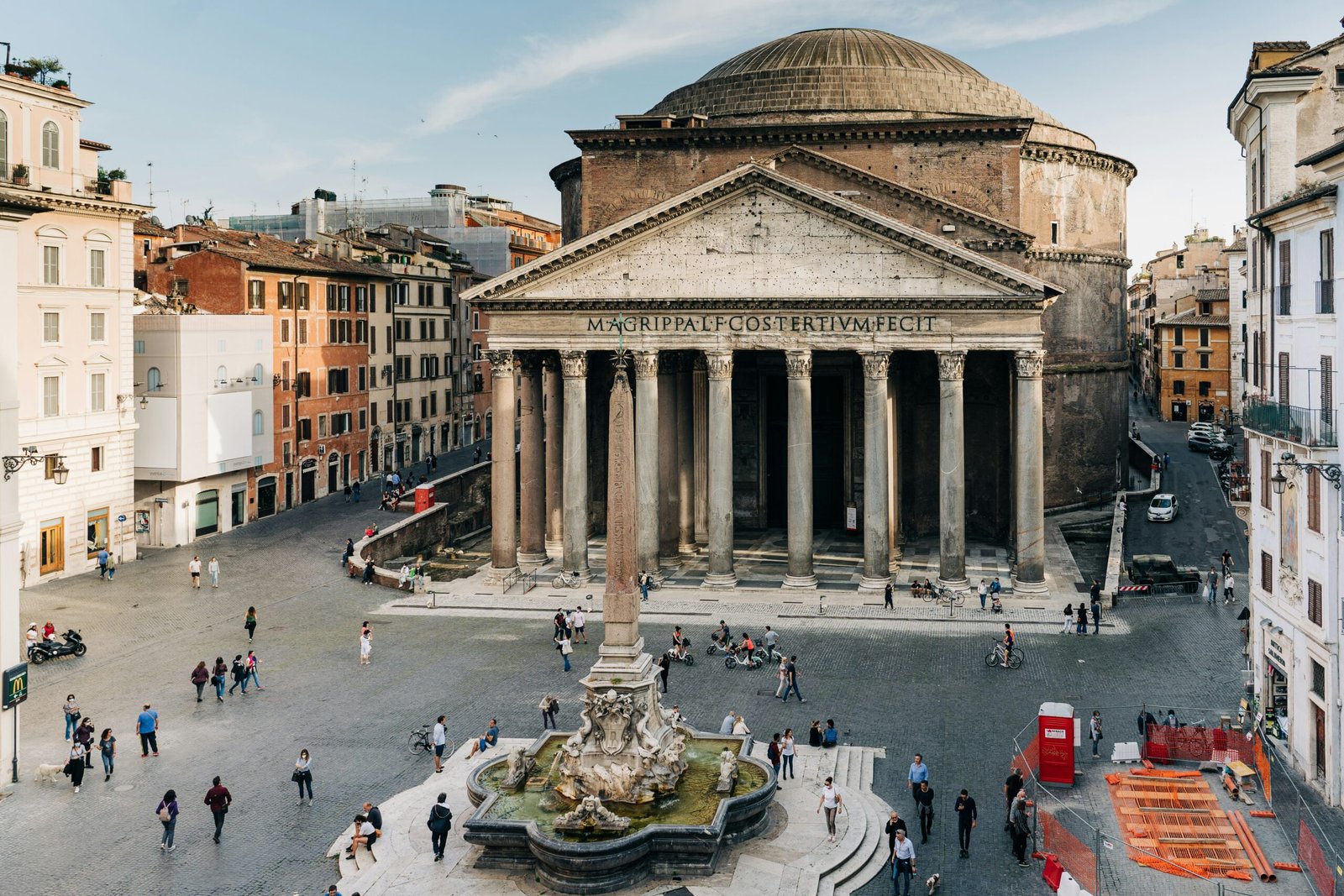
5. Admire the Pantheon’s Grandeur
Stepping inside the Pantheon is like entering a portal to the past. What strikes us most about this ancient Roman temple, remarkably preserved, is its oculus – the open circular hole at the apex of its massive concrete dome. It’s a marvel of ancient engineering and design, allowing a shaft of sunlight (or raindrops, on occasion!) to illuminate the interior. We find ourselves spending considerable time just gazing upwards, contemplating the genius of its construction and the uninterrupted view of the sky. Originally built as a temple to all gods, it was later consecrated as a Christian church, St. Mary and the Martyrs. The Pantheon’s endurance and its architectural brilliance continue to inspire awe in us, a testament to the Romans’ mastery of building. It’s a powerful and humbling experience to stand within its ancient walls.
6. People-Watch in Piazza Navona
Piazza Navona is one of our favorite places in Rome to simply exist. This elegant Baroque square, built on the site of the ancient Stadium of Domitian, is a vibrant hub of activity. We love to grab a gelato or an espresso from one of the many cafes lining the piazza and spend an hour or two people-watching. The star of the square is undoubtedly Bernini’s magnificent Fountain of Four Rivers, a breathtaking sculptural work that symbolizes the four major rivers of the four continents known at the time. The piazza is also filled with street artists, musicians, and vendors, creating a lively and captivating atmosphere. We enjoy the energy and the sense of being immersed in Roman life, observing the ebb and flow of locals and tourists alike.
If you’re planning a trip to the Eternal City, you might find it helpful to explore a related article that offers insights into various attractions and deals available in Rome. This can enhance your experience as you discover the rich history and vibrant culture of the city. To learn more about these exciting opportunities, check out this informative piece on tour attraction deals that can help you make the most of your visit.
Culinary Delights: Savoring Rome’s Flavors
For us, a trip to Rome isn’t just about seeing; it’s about tasting. Roman cuisine is a celebration of simple, fresh ingredients, transformed into dishes that are both comforting and exquisitely flavorful. We approach every meal as an adventure, a chance to deepen our understanding of Italian culture.
7. Indulge in Authentic Roman Pasta
Forget what you think you know about Italian food until you’ve tasted authentic Roman pasta. We have our go-to favorites, and we encourage everyone to try them all: Carbonara, Amatriciana, Cacio e Pepe, and Gricia. These are the cornerstones of Roman pasta, each boasting its own distinct character. Carbonara, with its creamy egg yolk, crispy guanciale, Pecorino Romano cheese, and black pepper, is a symphony of flavors and textures. Amatriciana, a rich tomato-based sauce with guanciale and Pecorino, offers a delightful tang. Cacio e Pepe, perhaps the simplest yet most challenging to master, relies on just cheese, pepper, and pasta water to create a velvety, spicy sauce. Gricia, often called “white Amatriciana,” is Amatriciana without the tomatoes. We love seeking out trattorias that specialize in these dishes, where the pasta is perfectly al dente and the sauces are made with love and tradition. It’s a truly transformative culinary experience.
8. Embark on a Gelato Safari
Rome is the birthplace of gelato, and for us, a day without gelato is a day wasted in the Eternal City. We consider ourselves gelato connoisseurs, always on the hunt for the best artisanal parlors. The key to good gelato, we’ve learned, is its texture – smooth, dense, and less airy than ice cream – and its intense, natural flavors. We always look for places that use fresh, seasonal ingredients and avoid those with overly bright, artificial colors. Our personal favorite flavors range from classic pistacchio and hazelnut (nocciola) to refreshing fruit sorbettos like lemon and raspberry. Don’t be afraid to try new flavors; often, the most unexpected combinations are the most delicious. A gelato safari isn’t just about eating; it’s about discovering the artistry and passion that goes into creating this beloved Italian treat.
While the iconic landmarks are essential, we believe that true Roman immersion comes from venturing off the beaten path and experiencing the city as a local. These are the moments that often become our most cherished memories.
9. Explore the Trastevere Neighborhood
Trastevere, meaning “across the Tiber,” is a charming, bohemian neighborhood that feels like a world away from the bustling city center. We love to lose ourselves in its narrow, winding cobblestone streets, adorned with ivy-covered buildings and colorful flowers. It’s a place where laundry hangs from windows, and the scent of freshly baked bread wafts from local bakeries. We enjoy exploring its artisanal shops, stopping for a leisurely aperitivo in a cozy piazza, and dining at one of its many authentic trattorias. In the evenings, Trastevere comes alive with a vibrant energy, as locals and tourists spill out onto the streets, enjoying the balmy Roman nights. It’s a fantastic place to experience a more laid-back, yet quintessentially Roman, atmosphere. We often find some of our favorite, most memorable meals here.
10. Indulge in a Passeggiata (Evening Stroll)
One of the most Roman things we can recommend doing is to partake in the passeggiata, the traditional Italian evening stroll. This isn’t just walking; it’s a social ritual, a time to see and be seen, to connect with friends and family, and to simply enjoy the beauty of the city as dusk settles. We love to dress up a little, even just a smart casual outfit, and join the flow of people strolling through piazzas like Piazza di Spagna, along Via del Corso, or across the bridges overlooking the Tiber. The light during the passeggiata hour is magical, casting a golden glow over ancient buildings and monuments. It’s a chance to feel completely integrated into the rhythm of Roman life, observing the locals, enjoying an gelato, and soaking in the relaxed, elegant ambiance. It’s a simple pleasure, yet it encapsulates so much of what we love about Rome – its beauty, its conviviality, and its enduring charm.
FAQs
What are some popular tourist attractions in Rome?
Some popular tourist attractions in Rome include the Colosseum, Vatican City, Trevi Fountain, Pantheon, and Spanish Steps.
What is the best way to get around Rome?
The best way to get around Rome is by using public transportation such as buses, trams, and the metro. Walking is also a great way to explore the city due to its compact size.
What are some traditional Roman dishes to try while visiting Rome?
Some traditional Roman dishes to try while visiting Rome include pasta carbonara, cacio e pepe, supplì (fried rice balls), and Roman-style pizza.
Are there any specific dress codes to keep in mind when visiting religious sites in Rome?
When visiting religious sites in Rome such as St. Peter’s Basilica or the Vatican, it is recommended to dress modestly and avoid wearing shorts, sleeveless tops, or revealing clothing.
What is the best time of year to visit Rome?
The best time of year to visit Rome is during the spring (April to June) or fall (September to October) when the weather is mild and there are fewer tourists compared to the peak summer months.